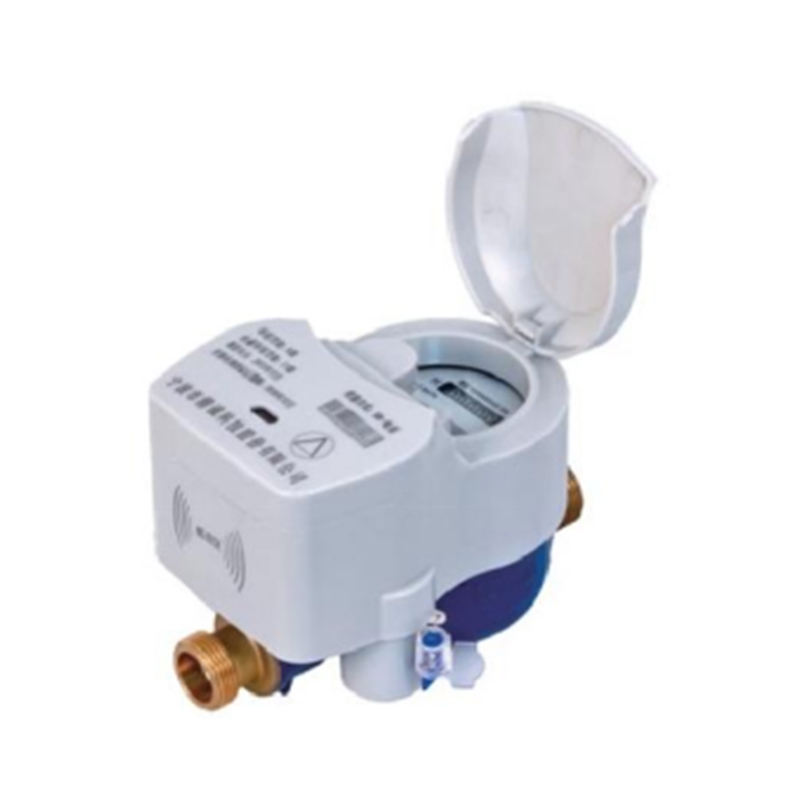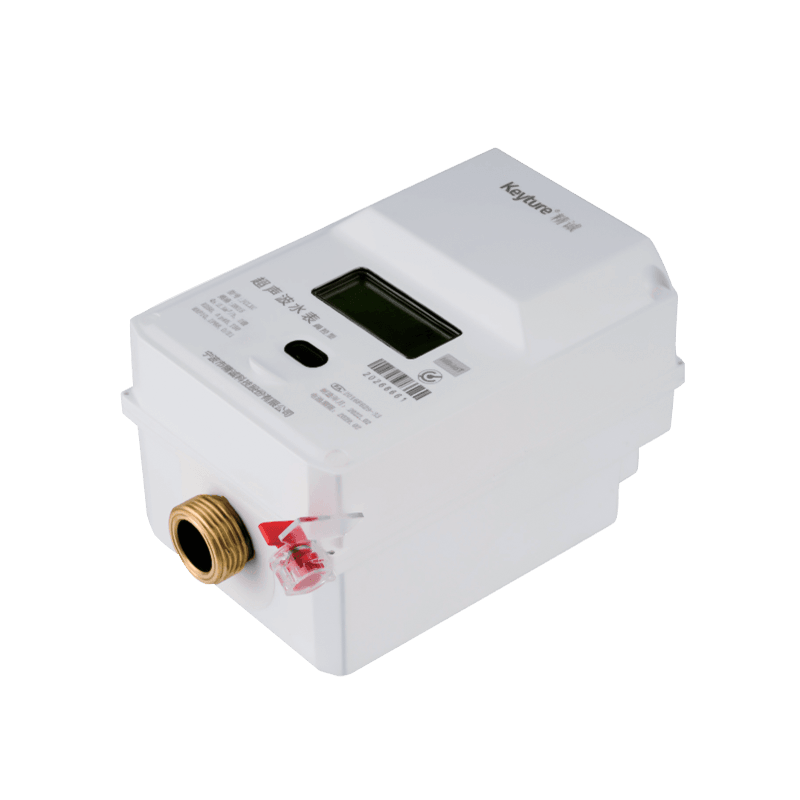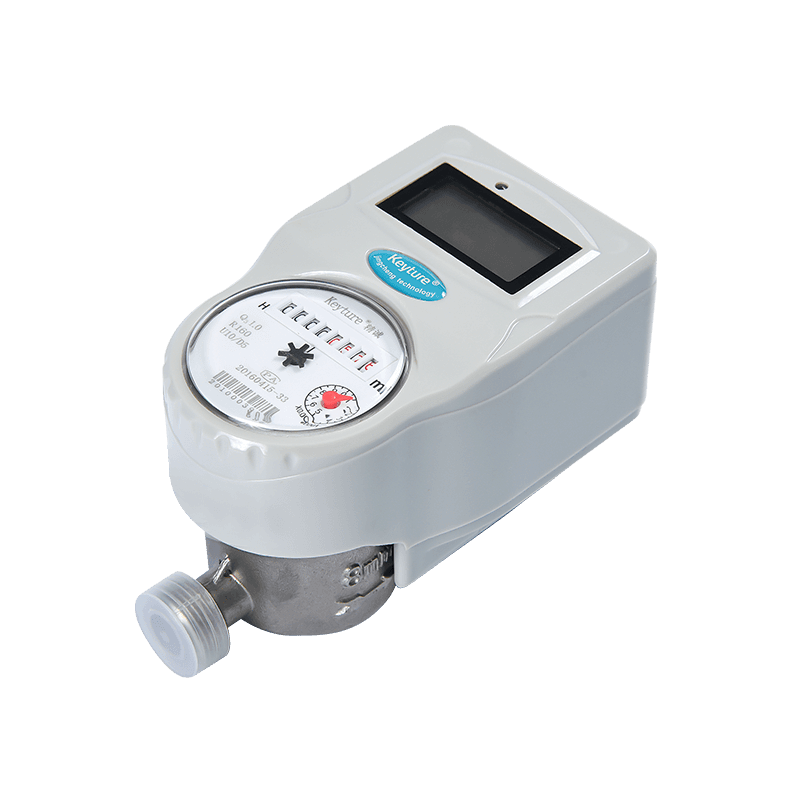



In modern water management and industrial fluid metering, ensuring the long-term accuracy and safety of drinking water measurement is a core requirement. As a critical device extending directly to the end-user terminal, a high-quality drinkable water meter must not only possess extremely high metering sensitivity, but must also meet stringent standards in material safety, pressure loss control, and adaptability to complex working conditions. This article will deeply analyze how to select the appropriate drinkable water meter based on actual working conditions from professional technical dimensions such as turndown ratio, accuracy class, pressure loss, and material specifications.
In modern international standards (such as ISO 4064:2014), the traditional classification of classes A, B, C, and D has been replaced by a more scientific turndown ratio (R=Q3/Q1). Q3 represents the permanent flow rate, and Q1 represents the minimum flow rate. A larger R value means that the drinkable water meter has a stronger drip leakage detection capability at low flow rates.
In pipeline network leakage control, the precise capture of micro-flows at night is crucial. If the R value is too low during selection, when a micro-leakage occurs at the terminal (lower than the Q1 starting flow rate), the water meter will not be able to record it, resulting in an increase in the apparent leakage rate.
To facilitate engineering selection and technical evaluation, the following table lists the core parameter performance of drinkable water meter with different technical principles under mainstream pipe diameters (DN15-DN32):
| Technical Parameters / Performance Indicators | Piston Type drinkable water meter | Multi-jet drinkable water meter | Ultrasonic drinkable water meter |
|---|---|---|---|
| Standard Turndown Ratio (R Value) | R160 to R400 | R80 to R160 | R160 to R500+ |
| Permanent Flow Rate Q3 (Take DN15 as an example) | 2.5 m³/h | 2.5 m³/h | 2.5 m³/h |
| Minimum Flow Rate Q1 (Take R160, DN15 as an example) | 15.6 L/h | 15.6 L/h | 15.6 L/h (High-end up to 5 L/h) |
| Maximum Permissible Error (MPE) Low-Flow Zone | ±5% (Q1 ≤ Q < Q2) | ±5% (Q1 ≤ Q < Q2) | ±5% (Q1 ≤ Q < Q2) |
| Maximum Permissible Error (MPE) High-Flow Zone | ±2% (≤ 30°C) / ±3% | ±2% (≤ 30°C) / ±3% | ±2% (≤ 30°C) / ±3% |
| Pressure Loss Class (Δp) | Δp63 (Approx. 0.063 MPa) | Δp40 or Δp63 | Δp10 or Δp16 (Extremely low resistance) |
| Straight Pipe Length Requirements (U/D) | U0/D0 (No straight pipes needed) | U3/D1 or U5/D3 | U0/D0 (Completely unaffected by flow disturbance) |
| Water Quality Sensitivity | High (Sensitive to particulate impurities, filter required) | Medium (Tolerates slight suspended solids) | Low (No mechanical moving parts, not easily clogged) |
Regardless of the measurement principle used, the measurement error of a drinkable water meter is strictly limited within a specific flow zone range. The entire flow range is divided into a low-flow zone and a high-flow zone by the transitional flow rate (Q2):
Low-Flow Zone (Q1 ≤ Q < Q2): This zone mainly evaluates the starting and low-speed operation performance of the water meter. Within this range, the maximum permissible error (MPE) allowed by international standards is ±5%.
High-Flow Zone (Q2 ≤ Q ≤ Q4): This zone covers regular water use and overload water use (Q4) conditions. When the water temperature is less than or equal to 30°C, the maximum permissible error must be controlled within ±2%; when the water temperature exceeds 30°C, due to changes in water viscosity, the permissible error is relaxed to ±3%.
Since the drinkable water meter comes into direct contact with terminal drinking water, the material safety of its body and internal components is a red-line indicator. Unqualified materials will leach heavy metals such as lead and cadmium during long-term immersion, or breed bacteria.
Standards require that its main metal body must use lead-free brass, composite plastics, or food-grade stainless steel (SUS304/SUS316). All internal plastic gaskets, impellers, and transmission gears that come into contact with water must pass major international drinking water safety and hygiene certifications (such as WRAS, NSF61, ACS, or KTW), ensuring that no harmful chemical substances are released under long-term high pressure and alternating temperature environments.
When fluid passes through a water meter, pressure loss is inevitable due to local resistance and friction. In areas where the water pressure itself is low, such as multi-story buildings or the ends of pipeline networks, a drinkable water meter with a lower pressure loss class (such as Δp10 or Δp25) must be selected to prevent affecting the normal water output pressure of users.
In addition, flow field distortion (such as eddies caused by elbows and valves) will seriously interfere with the impeller rotation of mechanical water meters, leading to measurement distortion. In pipeline nodes with limited installation space, priority should be given to ultrasonic or volumetric meter types with a U0/D0 straight pipe protection class, so that there is no need to reserve 5 or 10 times the pipe diameter of straight pipe sections before and after the water meter, thereby significantly reducing the difficulty of engineering installation and pipeline transformation.
SebelumnyaCara Memilih Meter Air Multi Jet Terbaik untuk Ketepatan Perindustrian
nextHow do water flow meter, ultrasonic flowmeter and digital water meter work in modern water systems

Address: No.168, Linmu Rd., Zon B, Jiangbei Investment Park, Ningbo, Zhejiang, China
Tel: +86-0574-83090480/+86-18892665118
Fax: +86-0574-83021045
Email: [email protected]
Web: https://www.keyturemeter.com/
Pautan cepat
Produk
Terminal mudah alih